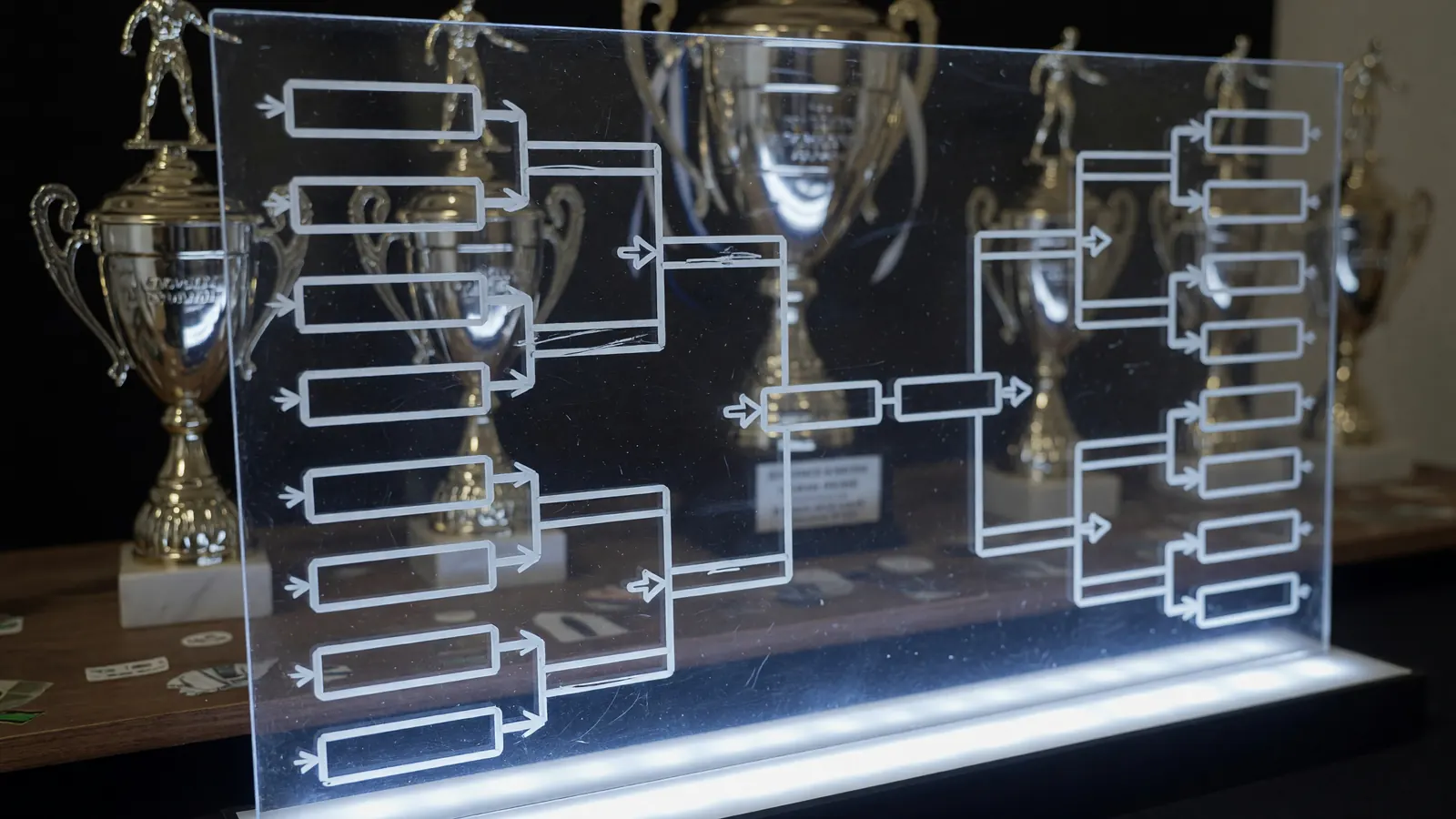
Reading a bracket is the first skill a new fan can pick up. The bracket is the schedule; the schedule is the story. Once you can read the schedule, the matches make sense before they start.
What a bracket is
A bracket is the schedule for a knockout tournament. Every team starts in one position. Each match eliminates one team. The bracket decides who plays whom, in which round, and how many losses each team can absorb before they're out.
A single-elimination bracket eliminates half the field per round. A double-elimination bracket gives every team a second chance in the lower bracket — lose once, drop down, play your way back. Most flagship events run double-elimination; smaller regional cups run single-elimination.
The three rounds that matter
Every bracket has three rounds that decide the title. The first round sets the storyline: which team looks dominant, which looks shaky, which carries an unexpected weakness into round two. The semifinals decide who plays tired and who plays fresh in the final. The final decides everything.
Watch those three rounds, and you have watched the bracket. The rounds in between — quarterfinals, lower-bracket qualifiers — matter for seeding but rarely decide the title.
Why the bracket matters before the first match
Because the bracket decides the room. Who gets a bye. Who walks the gauntlet. Which team plays tired and which team plays fresh. The bracket is set on day one; everything after that is execution.
The desk reads the bracket first, the teams second, the picks-and-bans third. A team that plays tired in the final is rarely the team that wins the final.
Reading a pick-ban
A pick-ban is a pre-match phase where teams alternately select and remove maps from the available pool. The veto order decides which map pool gets exposed first. The team that picks first usually opens with their comfort pick; the team that bans first usually targets the opponent's strongest map.
A strong pick-ban reveals three things: the team's comfort pool, the opponent's expected preparation, and the map the team is willing to play but doesn't want to play first. Strong teams run all three layers; weak teams run only the first.
What BO5 actually changes
Best-of-five is the standard for playoffs and finals at most flagship events. Three maps to win. The map pool depth gets exposed; teams with two strong comfort maps can be punished if their third map is weak.
Best-of-seven — four maps to win — is reserved for grand finals only. Patch drift matters more than in BO5; the map veto carries more weight than any other round in the event.
One place the broadcast always lies
The broadcast always lies about one thing: who's tired. A team that played yesterday's semifinal is, mechanically, more tired than a team that had a rest day. But the broadcast narrative usually frames it as "the team that played yesterday has momentum." Momentum is real; fatigue is more real. Watch the legs.
Putting it all together
Reading a bracket is a five-minute skill. Pick a tournament. Open the bracket. Identify the three rounds that matter. Check the rest days. Read the pick-ban. Watch the legs. The matches will tell you what they mean.